Packaging Formats BOP5
Join Our Packaging Community! 🚀
Want to strengthen your fundamentals and grow faster in your packaging career?
Join our exclusive Packaging Community — for students, freshers, entrepreneurs, and working professionals who want to learn packaging the right way.
🔥 Learn complex concepts in simple language
🔥 Stay updated with the latest trends
🔥 Network with packaging professionals
🔥 Get career and industry insights
👉 Register here: https://forms.gle/avfSYcNhr3j9dXDe6
Join today and take your packaging knowledge to the next level! 📦✨
Rajesh Modhvadia
Keywords
• Basics of Packaging
• Packaging Fundamentals
• Packaging Industry Overview
• Packaging Materials Explained
• Flexible Packaging Basics
• Packaging Formats
• Packaging Printing Techniques
• Introduction to Packaging
• Packaging for Beginners
• Learn Packaging Online
• Packaging Course for Students
• Packaging Basics Training
• Packaging Education
• Packaging Material Properties
• Packaging Films Explained
• Types of packaging materials
• PET vs BOPP vs PVC
• Food packaging materials
• Paper vs Plastic packaging
• Laminates in packaging
• Packaging for FMCG
• Packaging for startups
• Packaging design basics
• Rotogravure vs Flexo printing
• Why packaging matters
• Packaging strength tests
• Barrier properties in packaging
• How to choose packaging
• Rigid vs Flexible packaging
• Packaging technology basics
• Packaging sustainability basics
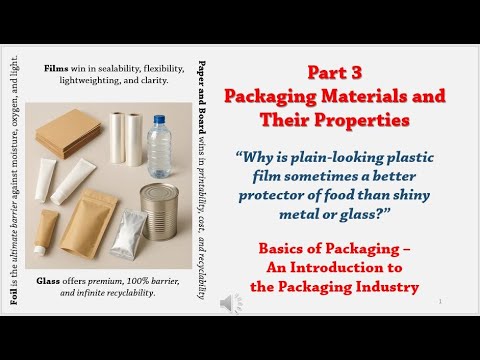
This video explores the wide variety of packaging formats used across industries and explains when, why, and how each format is selected. From lightweight flexible pouches to premium rigid containers, every format plays a strategic role in product protection, convenience, brand positioning, and cost efficiency.
You will learn about:
⭐ 1. Flexible Packaging Formats
Pouches (stand-up, zipper, 3-side seal, center-seal, gusseted)
Laminates and rollstock
Sachets and stick packs
Shrink and stretch films
Why they dominate FMCG: lightweight, economical, customizable, and excellent barrier options.
⭐ 2. Semi-Rigid Packaging Formats
Blister packs
Trays and thermoformed containers
Paper cups and tubs
Where they shine: good structure with lower cost, ideal for food service and pharma.
⭐ 3. Rigid Packaging Formats
Bottles (plastic, glass, metal)
Jars, tins, and cans
Folding cartons and corrugated boxes
Rigid plastic containers and injection-molded parts
Why brands choose them: excellent protection, strong shelf presence, better premium feel.
⭐ 4. Specialty & Emerging Formats
Eco-friendly formats (compostable, paper-based laminates)
Refill packs
Bag-in-box systems
Aseptic packaging
Smart and active packaging
Industry trend: sustainability, convenience, and e-commerce readiness.
🎯 What This Chapter Will Help You Understand
By the end of this chapter, you’ll be able to:
Identify all major packaging formats
Understand the selection criteria for cartons vs. bottles vs. pouches
Differentiate between rigid, flexible, and semi-rigid formats
Evaluate formats based on cost, convenience, product type, and brand positioning
Make better decisions in packaging development, procurement, or sales roles
📦 Why This Chapter Is Important
Packaging format is the first and most crucial decision in any packaging project.
Choosing the wrong format increases cost, damages, complaints, and brand weakness —
while the right format improves performance, consumer convenience, and market success.